
When I follow a brand, I want to feel like there is a reason to keep paying attention. Maybe I have had a positive experience with its products, relate to its personality, or enjoy the posts it shares. What makes me lose interest is repetitive content, confusing information, or advertising that promises something the product cannot deliver.
Rhode is a brand I keep coming back to because I like both its products and the content I see. In my experience, its skincare has left my skin feeling hydrated, and I enjoy using its lip products, blush, and contour. That does not mean everyone will have the same experience. It means the brand has given me a personal reason to trust it.
That trust is what I think a content strategy should help a business build. Posting regularly can keep a brand visible, but each post still needs a purpose. There also needs to be a realistic plan for creating, reviewing, and maintaining the information people receive.
What Has Changed in Fifteen Years?
Content strategy existed before today’s social platforms and AI tools. Rahel Anne Bailie’s history traces its roots to earlier practices in publishing, technical communication, and information management. By 2011, the field was gaining visibility through books and conferences, including the launch of Confab. Organizing useful information was already an established concern.
The practice has continued to develop. Brain Traffic’s revised content strategy framework, introduced in 2018, recognizes both the audience’s experience and the systems supporting it. Its four areas are editorial strategy, experience design, content structure, and process design. That includes decisions about voice and audience alongside responsibilities, organization, and maintenance.
To me, this shows that the biggest change has been the range of work a strategy needs to coordinate. A business may communicate through a website, social posts, videos, emails, and product information. Those pieces should help people understand the same business, even when their formats differ.
The basic purpose still makes sense today. People need useful information, and organizations need that information to support their goals. What has changed is how many ways there are to produce it, deliver it, and potentially get it wrong.
AI Makes More Content Possible
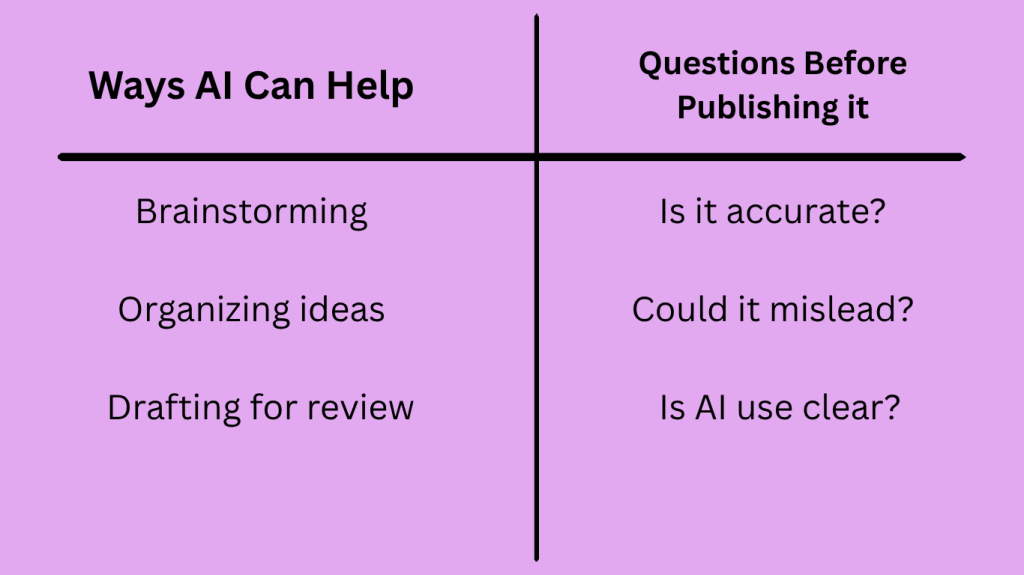
AI adds another layer to those decisions. Sabina Varga’s article for Planable describes uses such as brainstorming, outlining, drafting, and analyzing information. It also emphasizes checking sources and reviewing AI-generated material critically. Those uses can support a content plan, but they still require someone to decide what is accurate and appropriate.
I have mixed feelings about brands using AI. I can see the benefit of using it to organize ideas or explore different approaches. My concern is when a generated person appears to try on clothing or use a beauty product in a way that looks like a real demonstration.
As a customer, I want to know what I am looking at. A simulated result does not tell me how a product performs on an actual person. Even when the image looks convincing, I would still want real evidence before relying on it.
That is why I think AI needs to be part of the strategy discussion from the beginning. A team should decide which tasks it can support, who checks the results, and how generated material will be identified. Producing an advertisement quickly is not much of a benefit if it leaves people unsure whether they can trust it.
The Plan Depends on Other People
The preparation chapters in Meghan Casey’s The Content Strategy Toolkit stood out to me because I have experienced what happens when expectations and resources do not match.
In my social media work, I was asked to include more family photographs but was not sent enough to work with. I have also received information late while still being expected to create several posts within a short time. Wanting the content finished did not make the missing materials arrive sooner.
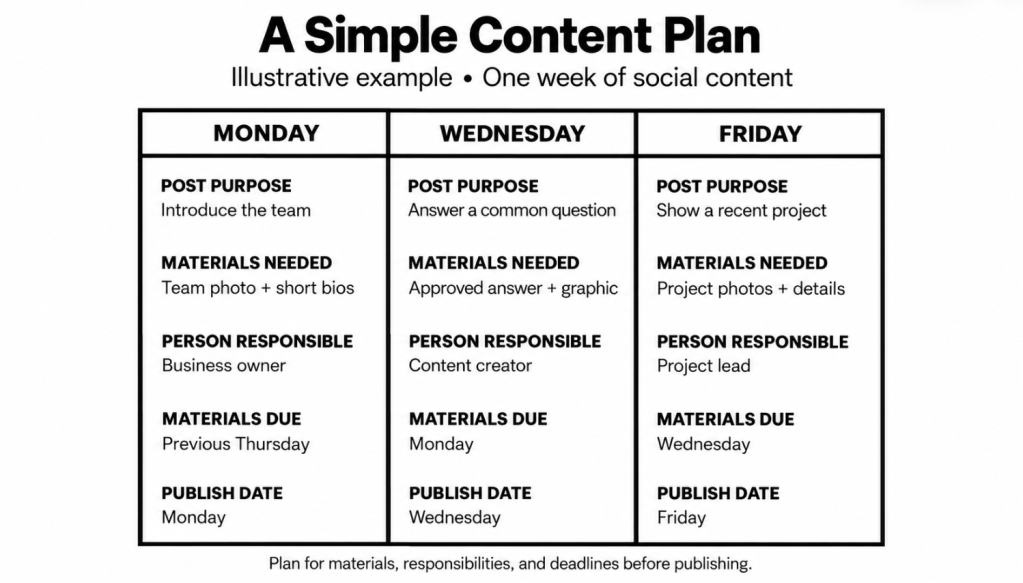
Casey’s emphasis on budget addresses this practical problem. Content requires staff time, research, tools, production, and review. A business case helps connect that investment to a worthwhile outcome. Buy-in matters because the people supplying information, approving decisions, and doing the work need to support the plan. Shared objectives, responsibilities, and realistic schedules make that support actionable (Casey, 2015, Chapters 2–5).
In my situation, preparation could have meant agreeing on how many posts were possible, when photographs were due, and how much time was needed after receiving them. That would have given everyone clearer expectations.
Fewer Posts Can Still Have a Stronger Purpose
If time or money is limited, I would rather see a brand publish fewer thoughtful posts than repeat itself just to stay active. Consistency matters, but a schedule should leave room for useful information and careful work.
I would judge success by whether people find answers, understand the offer, and choose to return. Posting less does not automatically create loyal customers. It does give a team a chance to focus its effort, then check whether that approach is working.
Content strategy matters because it connects the experience customers see with the work required to deliver it. Over the past fifteen years, the tools and responsibilities have developed, especially with the emergence of generative AI. The need for clear purpose, honest communication, and preparation has remained.
Before opening Canva or asking AI for ideas, I would want to know who the content is for, what it should accomplish, and whether the team has what it needs to make it well.
Sources
- Bailie, R. A. (2020). An uneven history of content strategy.
- Casey, M. (2015). The content strategy toolkit: Methods, guidelines, and templetes for getting content right. New riders. Chapters 1-5.
- Halvorson K. (2018). New Thinking: Brain Traffic’s Content Strategy Quad
- Varga, S. (2026). Everything you need to create a winning AI content strategy in 2026


Leave a Reply