
September 1st, 2025
For as long as I can remember, I’ve been interested by the detail of storytelling. My journey, from earning a communication degree at SUNY Cortland to currently pursuing a Master’s in Interactive Media, has been driven by a desire to comprehend how fashion brands can cultivate authentic communities. My ambition is to become a Social Media Manager who gets to craft those compelling digital narratives that resonate with people and since I enjoy the fashion world, to combine both of my passions together and become a Social Media Manager for a fashion brand.
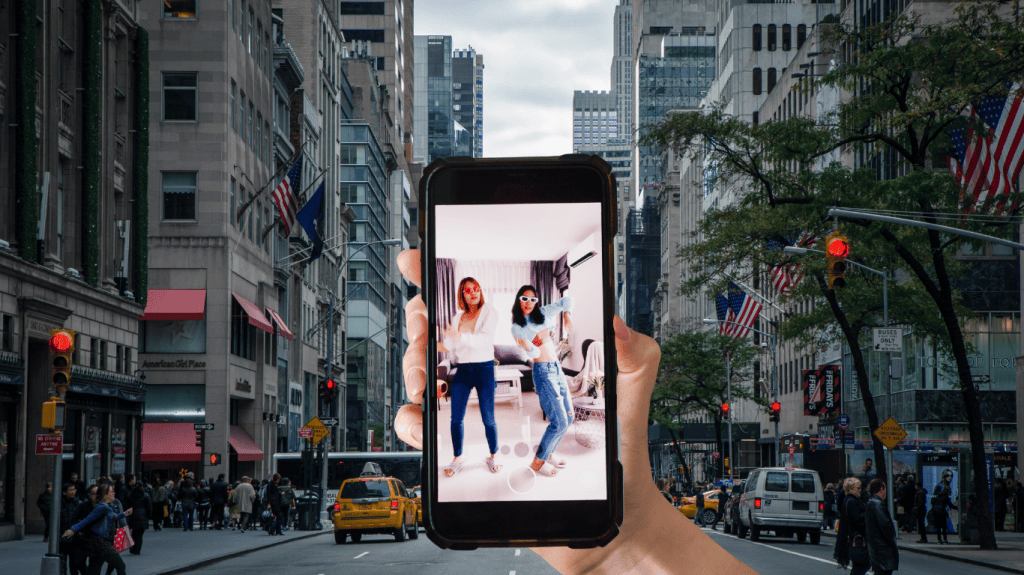
Recently, however, I’ve been wrestling with a significant question at the core of my chosen profession. The very platforms where we narrate these stories are structured to disrupt our attention. So, how can we create a genuine community when we are all existing in an attention economy that thrives on our distractions? This question has weighed heavily on my mind, particularly after engaging with research such as Johann Hari’s Stolen Focus and reflecting on that familiar feeling of being eternally “stuck in a scroll.”
Reading the introduction and chapters one through three of Stolen Focus was genuinely eye-opening for me. In an interview discussing the book, Johann Hari compellingly argues that the shame we experience regarding our lack of focus is misguided. It’s not a flaw in our character. He outlines how our digital environment is designed to capture our attention, with elements like the infinite scroll and algorithmic feeds aimed at keeping our attention for extended periods. It’s a business model that exchanges profound thought for superficial, relentless engagement.
I was curious to observe this phenomenon firsthand, I undertook a straightforward experiment that proved to be unexpectedly challenging. The New York Times’ “Test Your Focus” exercise, which the objective was simply to gaze at a painting for ten minutes. Seemed simple, right? It was far from it. Within the initial minutes, my brain felt like it was throwing a tantrum. I experienced a genuine, physical urge to glance at my phone, switch tabs, or do literally anything else.
Yet I pushed through, and a shift occurred. I pushed past the mental chaos, and the artwork, which was Whistler’s “Nocturne in Blue and Silver” truly began to spring to life. I picked up the details I had completely overlooked earlier. For example, the soft glow of the lights, the serene atmosphere, the single figure on the shore. My focus transformed from a quick glance to a profound, fixed stare. In that moment, I recognized the difference between merely consuming content and genuinely attending. It served as the ideal real-world illustration of the crisis Hari discusses.
This brings me back to the primary question I’m confronting as I get closer to my future career. If everyone is trained to scroll past everything, how can you create stories that genuinely matter?
I’m beginning to suspect the solution doesn’t lie in producing even louder, faster content to prevail in the battle for attention. The path ahead, particularly in a creative field like fashion, must revolve around developing a different type of environment. It’s about crafting materials that earn and respect our audience’s focus. It’s about progressing beyond pursuing viral metrics to forge genuine connections, something marketing specialists are beginning to refer to as “slow content.”
What might that entail in practical terms? Perhaps it involves a beautifully composed article, a mini-documentary about a collection, or an interactive lookbook that invites exploration. It’s about utilizing a platform like Instagram to narrate a coherent story over time, rather than merely presenting a disorganized assembly of images. It’s about creating dialogues and nurture a community where individuals feel like they are part of something, rather than just a target for advertisements.
The skills that I will be learning in my Master’s program will extend beyond just becoming experienced with the tools, but they’re also going to be about comprehending the individuals on the other side of the screen. My ambition is to avoid becoming yet another contributor to the overwhelming digital noise. I aspire to be a storyteller who produces content that deserves to be noticed. It’s a significant challenge, but my brief ten-minute experiment with a painting reminded me of a fundamental truth that genuine value lies not in the continuous scrolling, but in the instances that compel us to pause. That’s the type of work I aim to create.
 The Dark Edit
Leave a comment