Missing Something as Simple as Snow
Imagine growing up in space and never knowing what it feels like to watch snow fall. You might have seen videos of winter on Earth or heard people describe the quietness of a snowstorm, but you would have no memory of actually experiencing it. Even for someone who once lived on Earth, spending years inside a spacecraft could make familiar experiences like snow begin to feel distant.
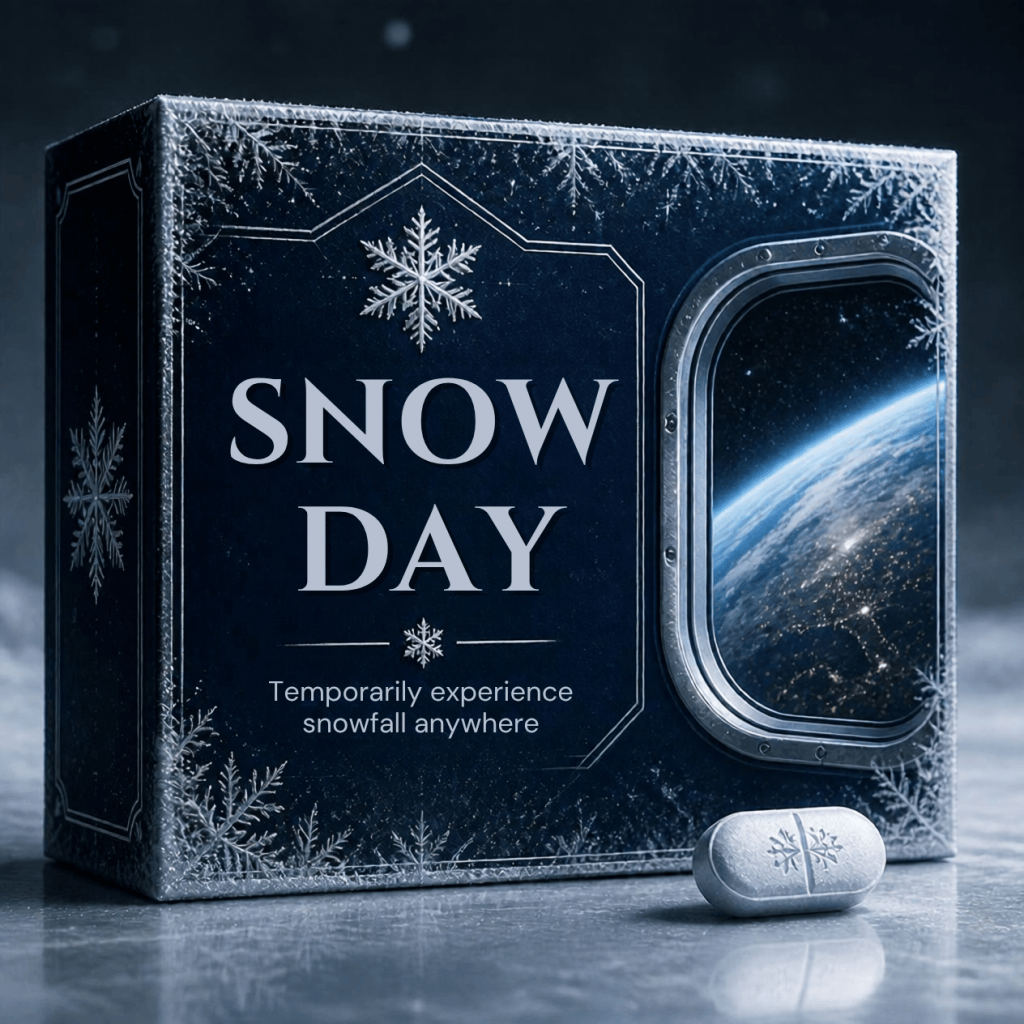
This possibility inspired Snow Day, one of the concepts I developed during The Thing from the Future. Snow Day is a pill that temporarily recreates the experience of snowfall without producing real snow or using water. It would allow space travelers to reconnect with Earth while giving children born in space the opportunity to experience a type of weather they have never known. The object is fictional, but the emotions behind it, nostalgia, homesickness, comfort, and curiosity are real. This is what makes design fiction useful: it turns a distant possibility into something people can picture and discuss.
Design Fiction Makes the Future Visible
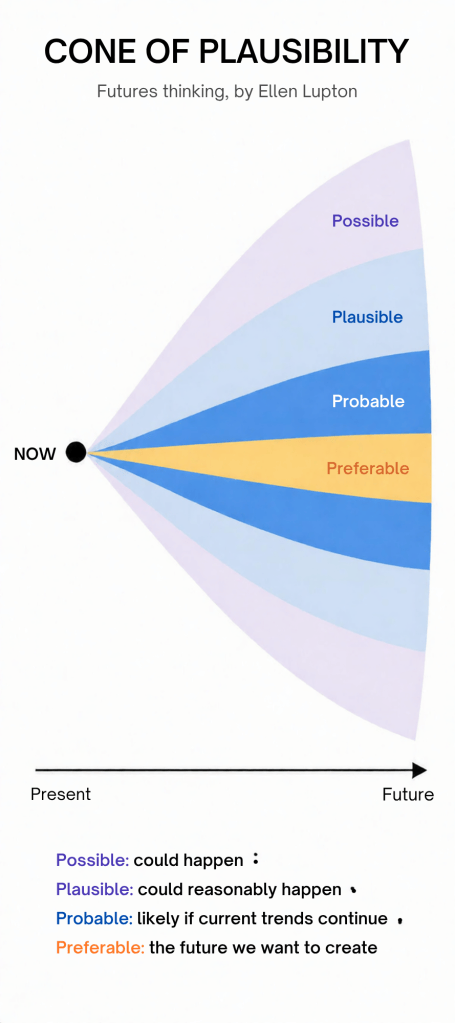
Design fiction uses imagined objects and scenarios to explore how people could live in the future. It is not meant to predict exactly what will happen. Instead, it asks “what if?” and creates enough detail to make that possibility feel believable.
Designer and researcher Julian Bleecker describes design fiction as making things that tell stories. Through the Near Future Laboratory, he explains that fictional objects can encourage conversations about technology, society, and everyday life. Instead of only writing a report about the future, a designer might create a product, advertisement, package, catalog, or instruction manual that appears to come from the future. (Near Future Laboratory)
Visual design is what helps these imagined objects feel real. Typography can suggest which company created an object. Color can make the future appear comforting, clinical, exciting, or dangerous. Materials, warning labels, packaging, photography, and signs of use can reveal how an object fits into daily life. The design does more than show what the product looks like; it provides clues about the larger world surrounding it.
Anthony Dunne and Fiona Raby make a similar argument in Speculative Everything. They describe design as a tool for creating ideas, not only products. Instead of immediately trying to solve a problem, speculative designers can ask questions about which ones they should prevent. Their purpose is not to create a perfect prediction but to encourage discussion. (MIT Press)
Stepping Into a Possible Future
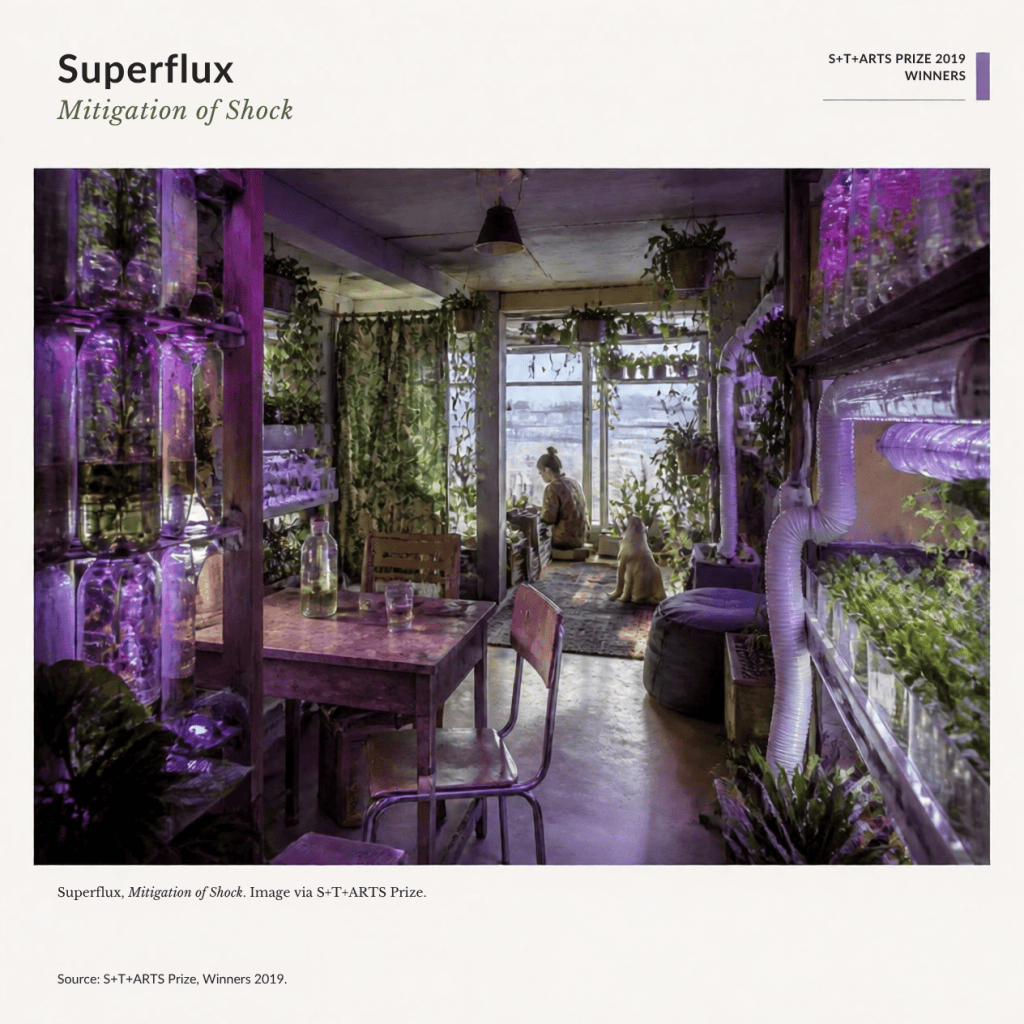
A strong example is Superflux’s Mitigation of Shock, an immersive installation that imagined a future London apartment affected by climate change. The space included indoor food-growing systems and other people showing how a family might adapt to environmental changes. Instead of presenting climate change only through numbers and statistics, the designers created a home that viewers could enter and examine. (S+T+ARTS Prize)
The apartment acts a the setting of a larger story. The objects inside it become visual evidence of what has happened outside. Viewers can imagine the people who live there, the problems they face, and the events that made these unfamiliar objects necessary. This demonstrates how visual storytelling can make an abstract future feel personal.
How ever imagined futures should not only look creative. Designers must also consider whose experiences they represent. The Design Museum has questioned whether alternative futures are truly inclusive or mainly reflect the perspectives of certain cultures and economics. (Design Museum) A futuristic design will not be meaningful if it ignores the people who would actually have to live with it.
What Would Snow Day Look Like?
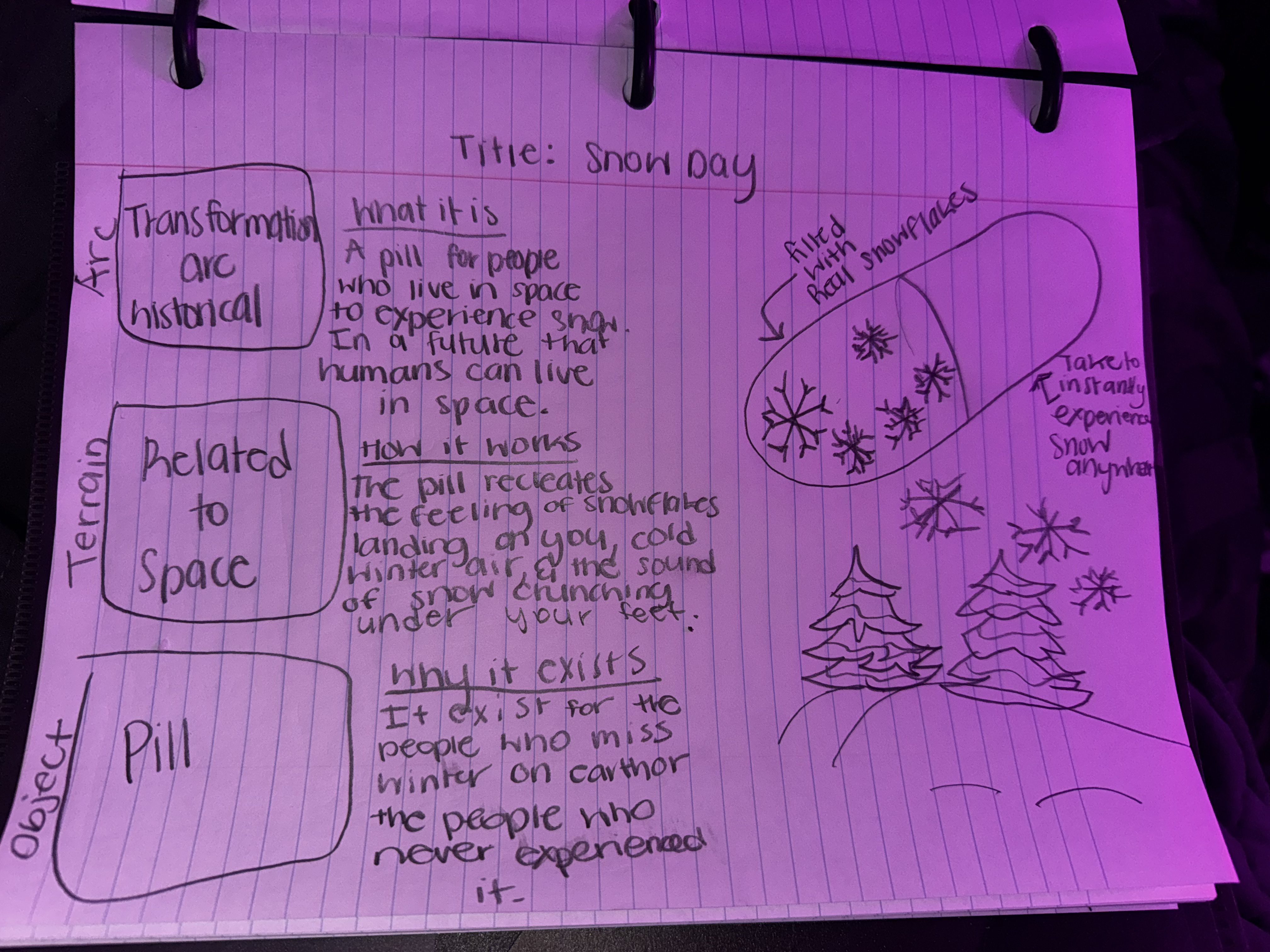
During The Thing from the Future, the combination of Transformation, Space, and Pill led me to Snow Day. The object would be small, but its visual design would need to communicate an entire sensory experience.
I imagine the pill inside black and icy-blue packaging with silver details that resemble frost forming across a window. A snowflake symbol would immediately communicate the purpose of the product, while an image of Earth could strengthen its emotional connection to home. The instructions would explain that the experience is temporary and does not produce actual moisture. These choices would make Snowy Day look like a believable future product while communicating coldness, memory, and comfort.
After someone takes the pill, the lighting inside the moon could shift to a soft blue-white color. Snowfall could appear through a projection or controlled sensory system, while the temperature becomes slightly cooler and the sounds around the person becoming quieter. The user would not simply take a pill, they would temporarily step into a designed memory of winter on Earth.
Our other concepts also showed how one object could reveal a larger future. One imagined a law requiring shoppers to return an old item before purchasing something new. That idea suggests a future shaped by overconsumption, waste, and limited resources. Another concept was used rings as a gift connected to sex and relationships. Although the objects were different, each one created questions about the kind of society that would need it.
A Future Object With a Human Purpose
Snow Day began as a random combination of cards, but developing it made me think about what could emotionally lose when they leave Earth. Most designs for space focus on survival, transportation, or advanced technology. Snow Day focuses on something less obvious: the comfort of an ordinary experience.
This is why design fiction matters to visual design. It gives form to ideas that do not exist yet and allows an audience to react to them. Once Snow Day has a shape, package, color palette, and imagined user, it becomes more than a strange idea about a pill. It becomes evidence of a future where people can survive in space but still miss the feeling of home.
The best design fiction does not provide every answer it creates enough visual detail to make us wonder what happened before the object existed, who needs it, and what its creation says about the future. Snow Day may never become a real product, but its story raises a real question: if people eventually leave Earth, which everyday experiences will they wish they could take them?


Leave a Reply