September 29, 2025
Being “busy” is a badge of pride in today’s business. Our inboxes are overflowing, our calendars are full, and we gauge our productivity by the number of chores we complete email a given hour. We are treading water all the time. But consider this, How recently have you finished a job that actually called for undivided, concentrated effort, the kind of work that genuinely stimulate value and innovation? You may be falling victim to the “busy trap” if you are having trouble remembering.
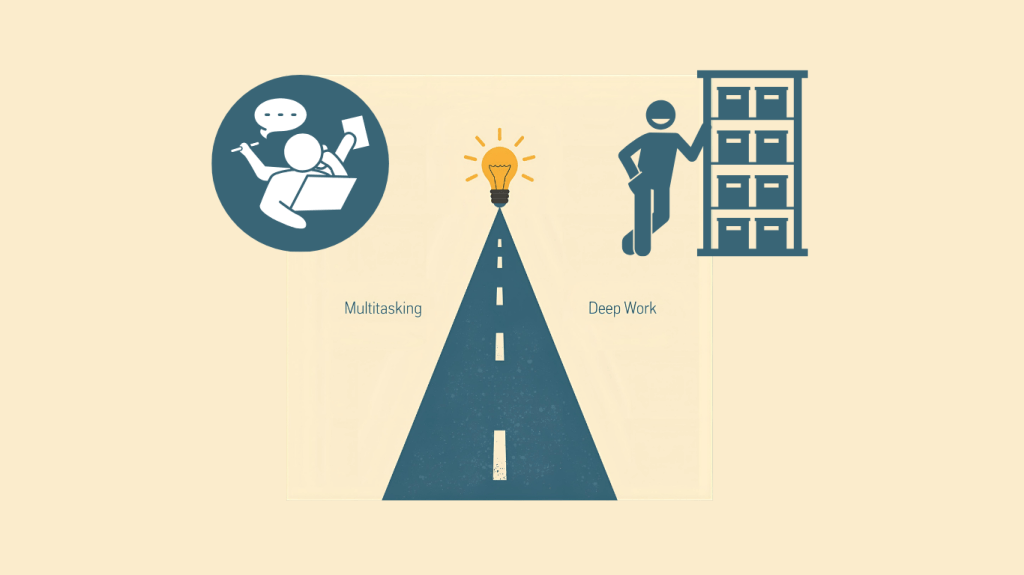
This is the main takeaway from researching productivity concepts like Deep Work, Flow, and Focus: Time is not created equal. A few hours of “deep labor” are significantly more beneficial than a full day punctuated with meetings, emails, and notifications.
What is Deep Work, Exactly?
Deep work involves focusing on a task without distractions, pushing cognitive faculties to the maximum. This effort adds fresh value, strengthens your skills, and is tough to imitate.
This is in contrast to “shallow work,” which is often administrative, readily repeated, and does not involve advanced intellect (such as responding routine emails or organizing meetings).
When you attain a state of Flow, which is the sense of being totally captivated and motivated by the activity at hand, your brain enters a zone of high productivity. This is when the brightest ideas emerge and the most complicated challenges are addressed.
Why Your Industry Needs It Now
Every professional business, from social media and public relations to design and production, has productivity challenges as a result of information overload and continual connectivity.
If you operate in a job that involves creativity (such as design or content production) or complicated problem-solving (such as development or strategy), frequent interruptions are the enemy of your worth. The time it takes to return to a tough activity after checking a notification can consume up to 20 minutes of productive work. This is not simply an individual concern, but an organizational crises. Organizations that adopt deep work principles can realize considerable increases in productivity, creativity, and general job satisfaction.
Your Call to Action: Strategies for Starting Today
You can not suddenly turn on a switch and start performing deep work, but you can establish the habits that lead to it. Try these practical strategies: Schedule “Focus Blocks”: Treat intense work time as an essential meeting that cannot be rescheduled or interrupted. Set aside 90 minutes to two hours per day for your most important, cognitively challenging work. Ritualize Disconnection: Develop a clear procedure for entering a deep work state. This may include shutting all email tabs, placing your phone in another room, or wearing noise-cancelling headphones. Identify Interruptions: Keep track of where your time is truly going. Administrative tasks are likely to take up valuable creative time. Delegate or group shallow tasks (such as checking email) into 30-minute time intervals.
The message is plain.
Productivity is not about being busy, but about being focused. By devoting yourself to short, intense bursts of focused effort, you may progress from just managing your task to mastering it.


Leave a Reply