The Dark Edit

Stories, culture, design, and life online through my lens.

  • November 9, 2025

    The Dilution of Discourse

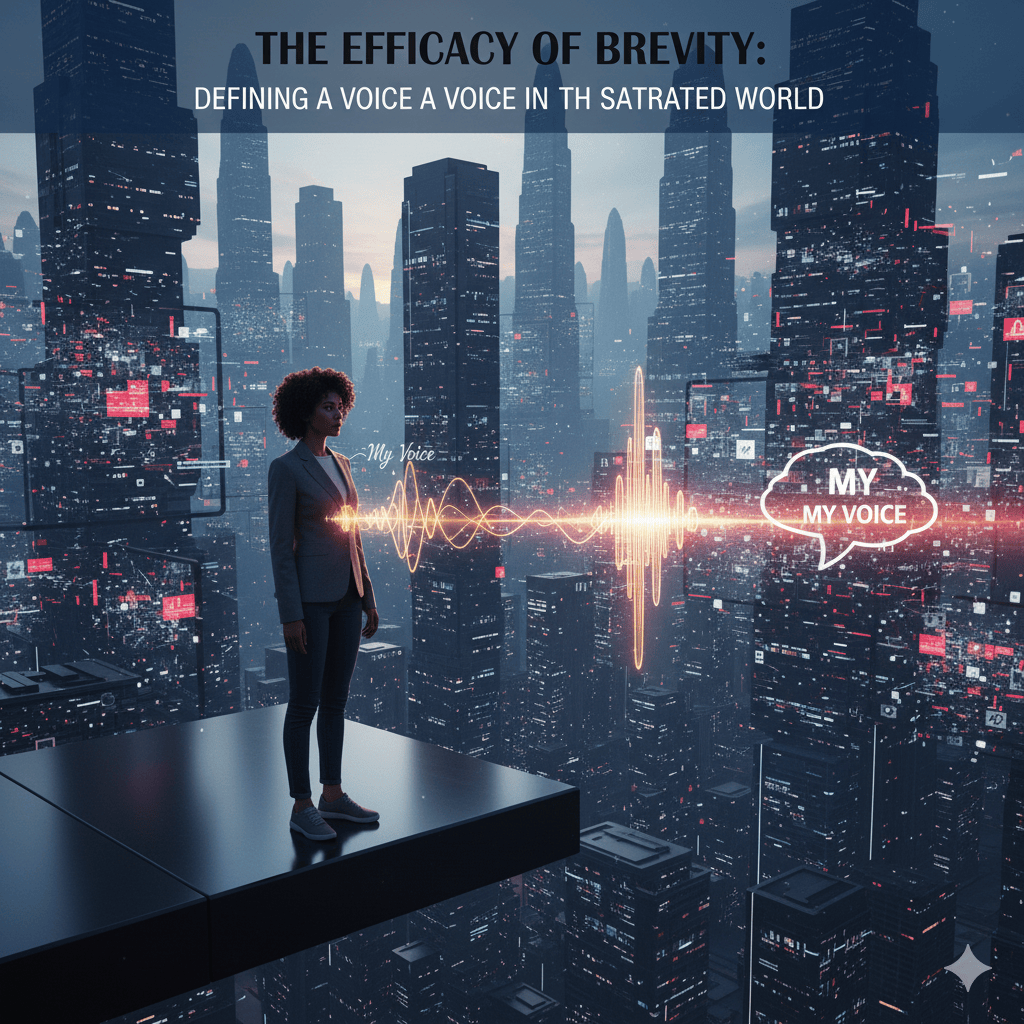
    The exponential increase in accessible communication channels has inadvertently led to a dilution of discourse. As individuals and entities contribute to an ever-expanding pool of content, the distinctiveness of any single contribution tends to recede. This phenomenon suggests that the quantity of output often correlates inversely with its perceived significance, making it difficult for an authentic ‘voice’ to emerge and establish influence.

    Strategic Deliberation over Constant Output

    To establish a distinctive presence amidst this communicative overload, a strategic shift from constant output to deliberate articulation is required. This involves a conscious decision to pause, analyze, and synthesize before contributing. Such a contemplative approach allows for the refinement of ideas and the construction of messages that possess clarity, conciseness, and substantive weight. The goal is to maximize impact through economy of expression rather than sheer volume.

    The Imperative of Precision

    The principle of “saying more with less” is fundamentally about precision. It advocates for the meticulous selection of language, ensuring that every word serves a definitive purpose and contributes to the overall coherence and power of the message. This disciplined approach minimizes extraneous information, allowing the core idea to stand out with greater prominence. In an environment where attention spans are fragmented, brevity becomes a critical asset in conveying complex ideas effectively.

    Authenticity as a Differentiator

    Ultimately, the development of a compelling voice in a noisy world relies heavily on authenticity. Attempts to mimic prevailing trends or to appeal to the lowest common denominator often result in messages that lack genuine impact. Conversely, communication rooted in unique perspectives, well-considered insights, and transparent intent possesses an inherent gravitational pull. It is this genuine resonance that allows a voice to transcend the ambient noise and achieve meaningful engagement.

    In conclusion, the efficacy of communication in a saturated world is increasingly tied to its conciseness and authenticity. By prioritizing deliberate articulation, precision, and genuine expression, individuals and organizations can navigate the complexities of modern discourse and establish a voice that truly resonates.

  • November 9, 2025

    When I realized that simple writing is not easy.

    I am reading On Writing Well truly resonated with me. Zinsser’s instruction about reducing phrases to their simplest form reminded me that writing effectively is far more difficult than it appears. I have always enjoyed words and the rhythm, originality, and personality that they convey, yet I sometimes get lost in them.

    Zinsser says, “Clutter is the sickness of American literature,” which stung a little. I started noticing how many filler words I use when I am hesitant or attempting to appear smarter than I am. I understood that successful writing is not about decorative words, but it is about believing that your thoughts are strong enough to stand alone.

    Context Over Everything

    Gary Vaynerchuk’s “Content is King, but Context is God” brought everything together for me. As someone who works in social media, I see this regularly with a fantastic article that goes viral not because it is flawless, but because it is timely. It feels appropriate for the audience.

    The same goes for writing. Zinsser reminds us to constantly know who we are writing for, while Gary Vee emphasizes the importance of knowing where they are, which is mentally, emotionally, and digitally. Writing that resonates stems from empathy, not ego.

    Fewer words, more meaning.

    Bill Gates once stated, “Content is King,” but what struck me was that he meant meaningful content is the type that instructs, entertains, or connects. I believe that the best writing, like the best social media posts, has one goal, and that goal is to make someone feel something genuine.

    This week reminded me that writing, whether it is a blog piece or an Instagram caption, requires honesty. It is not about impressing others, but it is about expressing oneself. When we simplify, we do not lose creativity; rather, we allow it to breathe.

    So, going ahead, I am challenging myself to write with intention rather than dress it up. Because, in a world filled with noise, clarity is more than just refreshing; it is powerful.

    This was written, created, and designed without the use of any AI.

  • November 2, 2025

    Paradox of the Audience

    While reading William Zinsser’s On Writing Well, I could not help but pause while reading Chapter 5, “The Audience.” He offers seemingly contradicting advice, which is, “Do not lose the reader,” and “Do not write for the reader.” At first, I laughed because it felt like the jargon talk that is discussed in writing. But as I went more into the chapter, I discovered Zinsser was not contradicting himself. He was explaining equilibrium.
    In Chapters 3 and 4, Zinsser promotes clarity and simplicity, which includes removing clutter, avoiding inflated academic tones, and believing that clear writing is the most professional type. This, of course, benefits the reader. As he states, “The secret of successful writing is to remove every sentence to its purest components.” Readers should never have to decipher your meaning; you should make it simple for them. However, in Chapter 5, his instruction shifts inward, and his suggestion is to stop trying so hard to please others. Zinsser states that the best writing occurs when you forget about your audience and express what you truly believe and feel. It is about honesty, not performance.

    Finding My Own Voice

    As a communication and social media student, I found this concept unexpectedly liberating. I will always be writing for someone else, like brand managers, audiences, clients, and even algorithms. Every caption, blog, or campaign is typically designed around “what will generate engagement.”

    But Zinsser reminds me that good writing does not begin there. It all starts with genuineness. When you write about what truly interests you, your enthusiasm automatically draws readers in. Whenever I am writing about a topic that I truly enjoy, I find that I am just typing away and I lose track of time. On the other hand, if I had to complete a writing assignment in college about a topic that I am not interested in, I would procrastinate more, or I would feel like I have to add something to it to draw the reader’s attention. But he puts it in a perspective that, “You are writing for yourself; do not try to guess what the editor wants.”

    That is precisely aligned with Steven Pinker’s “The Source of Bad Writing,” in which he claims that many writers suffer from the curse of knowledge, believing the audience already knows what they know. Zinsser and Pinker agree that writers must respect their readers’ need for clarity while still trusting their own intuition and distinctiveness.

    Writing for Today’s Distracted Reader

    Zinsser wrote “On Writing Well” decades ago, yet his advice remains relevant to the digital age. But what I enjoy is that he still keeps the facts about what makes. a good writer, but he still updates it. Readers today are even more distracted, as Maria Konnikova points out in “Being a Better Online Reader,” describing how individuals now skim rather than read deeply.
    This is why Zinsser’s message is ageless. Writing that is authentic to you keeps people interested because it cuts through the noise. If I write only to please, my words lose significance, and the readers could tell the writing has no personality. If I write honestly and passionately, even the fast-scrolling audience can sense it.

    My Takeaway

    Zinsser’s “contradiction” makes perfect sense. Write for yourself to discover your voice. Edit to ensure that the reader understands your message. As someone pursuing a creative job, I am finding out that both are equally important. Great writing, like great content, occurs when confidence and consideration come together. Just because a person adds fancy words to their writing does not make that piece of writing any better.

  • November 2, 2025

    Introduction: Finding My Path

    Gabriella Rinaldi, who adds a new perspective on pop culture and digital branding to the batch. Her family often refers to her by her full name, but she is better known as Gabby to others. She is a proud Virgo who recently turned 22.

    Family Roots and First Milestones

    Gabriella is her family’s first four-year college graduate and the first one to go away to school. As one of four girls in a traditional Italian family, the thought of her moving away to school was first received with a simple no. Gabriella, on the other hand, was motivated to attain independence and pushed for the experience, despite the fact that she relied heavily on her loving and supportive parents.

    Discovering a New Direction

    She graduated from SUNY Cortland in May of this year with a Bachelor’s degree in Communication. This was not her original goal as she started college as an Early Childhood Education major. While the controlled, planned style of teaching appealed to her, she quickly discovered that her genuine passions were elsewhere and made the move. Gabriella felt overwhelmed by the prospect of graduating, but she chose to put her energies into getting a master’s degree.

    A Passion for Creativity and Communication

    She is drawn to interactive media and communications as they provide a valuable outlet for her creative side. She finds the entire profession intriguing and encouraging, viewing it as an opportunity to become the best version of herself and love what she is doing.

    Inspiration from Pop Culture and Branding

    Gabriella draws professional inspiration from engaging celebrity social media marketing and branding. She cites Charli XCX’s “Brat” album launch as a recent example of “perfection,” which resulted in a viral “Brat Summer” trend and a distinct “cool energy.” She admires Kourtney Kardashian’s visually beautiful design and social media initiatives. Gabriella, a lifelong Justin Bieber fan, also emphasizes the importance of his social media-driven surprise album, Swag, being released. She describes how this technique resulted in tremendous streaming debuts, number-one chart positions in over 100 countries, and albums that swiftly surpassed one billion plays.

    Looking Ahead: A Future in Social Media

    These instances are a major reason Gabriella wants to be a Social Media Manager. She thrives on having a platform to generate captivating material for an audience, which she already does by making and sharing collages and moodboards from her Pinterest boards with her friends on Snapchat. Gabriella is eager to express her artistic side and thoughts.

  • October 26, 2025

    The Attention Span Crisis

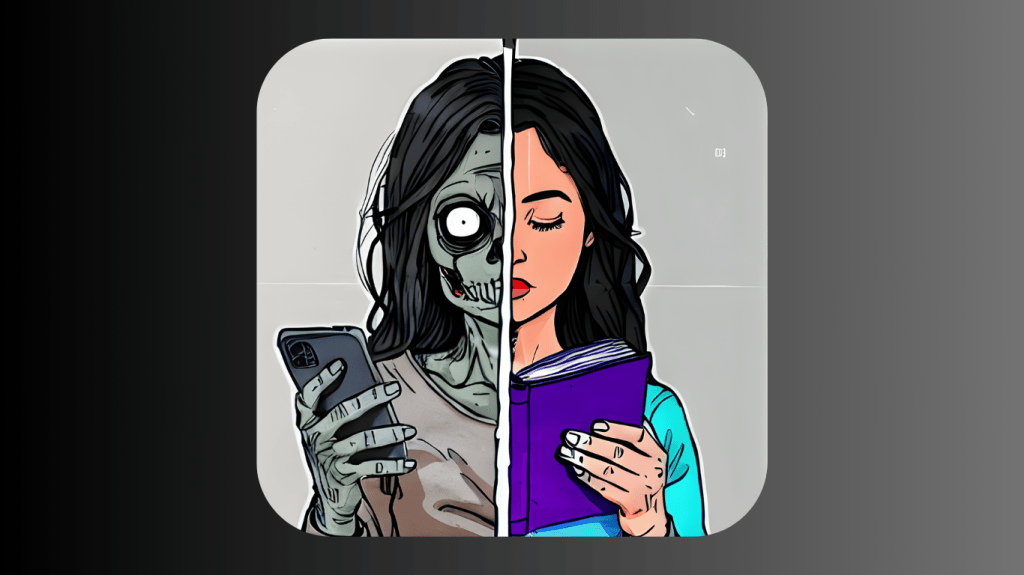
    I have noticed that my concentration is deteriorating. I can spend hours organizing Pinterest boards or scrolling on TikTok, but when I try to read a lengthy piece, my concentration wanders halfway through. It is as if my brain is wired for perpetual refresh mode, needing the next swipe, click, and notification.

    Nicholas Carr’s “Is Google Making Us Stupid?” made me understand that this is not just my problem. Carr shows how the internet has physically changed the way we think and read. He claims that humans have become “mere decoders of information,” rather than deep readers. That seems terribly accurate. I used to like getting lost in books, but recently, I get lost in tabs. Even when I am reading something artistic or cultural, for example, like a blog post about Brat Summer or a new product that the Kardashians are coming out with, I generally multitask or scan for the highlights.

    The Way We Read Online is Changing


    Maria Konnikova’s “Being a Better Online Reader” explores recent scientific advancements. She emphasizes that we not only read differently online, but our brains also analyze digital content more quickly, but on a surface level. Scrolling encourages skimming, and hyperlinks continuously distract us from the content. That struck a chord with me because I live entirely online. As part of my creative process, I continuously read captions, articles, and comments. However, Konnikova’s study suggests that digital overload may be educating people to prefer rapid responses over deliberate thoughts. As someone pursuing a profession in social media and branding, it made me wonder, if we are consuming material so quickly, how does it influence how I design and create it?

    Writing Clearly in a Busy World

    Steven Pinker’s “The Source of Bad Writing” dramatically transformed my perspective on communication. He discusses “the curse of knowledge,” the theory that writers sometimes assume readers already know what they know, resulting in confusing, jargon-filled writing. That is something I did without recognizing it. When I write pieces for Rinaldi Electric or The Juice House, I occasionally forget that not everyone knows the context of a campaign or caption. Pinker’s approach is simple yet effective, which is get out of your own brain. Ask for comments and read your essay aloud. It is not about sounding smart, but about being understood.

    Learning How to Read and Create Again

    These texts challenged my entire relationship with the internet. The internet world allows me to express myself, such as through Pinterest boards, posting on social media, and pop-culture narratives, but it also causes me to lose focus. Now I am attempting to slow down. To read more deeply. To apply the same effort I devote to producing a collage or dissecting a campaign to how I read and write. Because originality and clarity require equal attention, whether it is a TikTok caption, a blog post, or a story that stirs up emotion.

  • September 13, 2025

    I made the decision to take a “detox” from social media, mainly to limit my TikTok usage. I realized I was spending excessive time aimlessly browsing through videos, instead of doing things that benefit my mental health and overall well-being. I wanted to explore how a break would affect my overall digital habits. The outcomes were more unexpected and enlightening than I anticipated. This was not just a pause from social media, it was an experiment to gain insight into my connection with my phone. There wasn’t just one motive for pursuing this digital detox, the reasons were to alleviate anxiety, enhance sleep quality, and regain time for more constructive and beneficial actives. For example, I want to go on more walks, learn how to sew, or even start scrapbooking. Not only do I want to take on this challenge to maybe start a new hobby, but I just want to block out any noise that will distract me from doing work and hold me back from being the best version of myself. I hoped to see a notable decline in my screen time and an improvement in my general well-being.

    Prior to the Detox: My Online Behaviors

    Reflecting on my usage prior to the experiment, it became clear where most of my time was spent. In just a week, I accumulated a total of 1,253 minutes on TikTok, translating to over 20 hours spent on consuming, liking, and sharing posts. The analysis revealed that I was spending approximately 13% of my time that week on this one app. My average daily screen time was already quite high at 178 minutes (almost 3 hours), peaking at 431 minutes on September 6th.

    The distribution of my app usage highlighted a similar trend of significant social media engagement. Instagram was my second most utilized app with 365 minutes, followed by Spotify at 271 minutes, Messages at 260 minutes, and Snapchat at 140 minutes. Such excessive screen time is frequently related to the rising feelings of anxiety, small attention spans, and an ongoing fear of missing out (FOMO). I was certainly feeling the pressure and was ready to make a shift.

    The After: The Surprising Turn

    The detox was successful in one aspect, which was, I successfully lowered my dependence on TikTok. However, the data from the week that followed the experiment showed an unexpected and important development. My average daily screen time didn’t go down, it actually increased. It spiked to an average of 317 minutes each day. What caused this? I simply substituted one habit for another. Instead of spending hours on TikTok, I found myself dedicating even more time to Instagram, which represented 64.1% of my total app usage. Messaging was the second most used category at 12.9%, with apps like Snapchat, Spotify, and Duolingo trailing behind. This is a typical trend for many individuals attempting to detox from social media. Our attention span is limited, and when we eliminate one source of distraction, our minds often look to fill that gap with another source. The true problem isn’t the app itself, but the fundamental psychological need for ongoing stimulation and connection.

    The Larger Perspective: My Weekly Usage of Screens

    Upon examining my screen time from September 7th to September 13th, a distinct weekly trend became apparent. My screen usage peaked during the weekends, reaching 7.2 hours on Sunday and experiencing another increase on Saturday. Usage then decreased throughout the week, with the lowest point occurring on Wednesday. This trend aligns with research suggesting that screen time tends to increase on weekends due to more leisure opportunities and fewer scheduled activities. For many people, the weekend serves as a time for passive entertainment, making our phones the most accessible option.

    The most important takeaway from the detox was that it is insufficient to simply remove one app. The true challenge lies in addressing the fundamental behaviors and establishing healthy limits concerning technology, particularly on the days I am most prone to losing track of time. This experiment was less about “curing” my phone dependency and more about gaining insight into my habits. It demonstrated that genuine digital well-being is not solely about avoiding a specific platform; rather, it involves being more intentional with my device usage. It is about reclaiming control from the constant notifications and seeking a better middle ground between my digital and real-life experiences.

  • I am thrilled to announce the completion and release of my final white paper, “The Deep Focus Advantage: A Strategic Blueprint for Combating SMM Burnout and Maximizing High-Impact Content.”

    For too long, the Social Media Management (SMM) industry has been trapped in a reactive, “always-on” culture. We’ve been led to believe that juggling tasks is productive, but my research confirms this is a false economy. The continuous context-switching required to manage real-time engagement and internal pings is a critical problem: the cognitive cost of distraction means it takes an average of 23 minutes and 15 seconds to fully regain focus after an interruption. This drain results in immense cognitive fatigue and contributes to the staggering statistic that 63% of SMMs report job-related burnout.

    This fragmented attention not only harms people, but it also harms the bottom line, accounting for an estimated $650 billion in lost productivity among American workers each year.

    My research proposes a fundamental solution, which is the institutionalization of Deep Work and Flow states. I suggest that future performance is determined by the quality of strategic output rather than the speed with which responses are delivered.

    The Strategic Blueprint contains actionable actions for scheduling, defending, and executing obligatory Deep Work Blocks, ranging from creating organized processes (Agile & Kanban) to employing time-blocking. It is time to get out of the Shallow Work Trap and recover the creative mandate of the SMM function.

    Read the entire white paper to take your process from perpetual chaos to sustainable, high-impact excellence!

  • October 1, 2025

    In all honesty, I am just as guilty as everybody else when it comes to my phone and social media. It is like an extension of my hand, and I’ve spent years browsing through Instagram, TikTok, and Snapchat. I enjoy keeping up with pop culture, and yes, I am a fan of the Kardashians. Their lives, fashion, products and their supposedly flawless existence are all intriguing. For years, I’ve watched their shows, absorbed every fashion trend, and even fantasized about living a luxurious life like theirs. But now, something has changed for me, and I’m beginning to question if the shiny facade of social media conceals something a lot more difficult.

    The Point of No Return I recently watched The Social Dilemma. If you haven’t watched it, after you are done reading this, go watch it on Netflix. It is believed that 100 million people worldwide have watched it, and with good cause. It reveals how these platforms are meant to attract, influence, and eventually damage us. It’s more than simply there to throw away our time. It’s also destroying our mental health, self-esteem, and even our social structure. Before The Social Dilemma, I assumed I had a normal habit, just like any person in their 20s. Now I see it for what it is, a carefully crafted trap. These applications are more than simply tools, they are complex machinery built to keep us browsing, clicking, and consuming. And the cost? It’s far higher than I ever expected. Consider the influence on how we perceive ourselves. When I look at the Kardashians, I see gorgeous skin, luxury clothing, and luxurious getaways. It’s easy to become absorbed in that ideal and compare my own life and appearance to theirs. Suddenly, my regular skin gets a flaw, even when I consistently use the products celebrities say will “make your skin the clearest it has ever been,” my clothing isn’t trendy enough, and my past vacations suddenly become boring. This cycle of comparison is an invisible attack of self-esteem, especially among young people who are still discovering who they are. Tailored perfection is constantly being shoved in our faces, which creates an unachievable goal.

    The Expensive Price of the Spotlight However, even the seemingly “perfect” lifestyles are not flawless. For me, no one better represent this reality than Justin Bieber. I have been a Belieber since 2009. I know every single album and era. He rose to superstardom at a very young age, achieving a level of fame and money that most of us dream of. Millions of followers idolized him, yelling his name and obsessing over his every action. Nonetheless, his journey has been a public demonstration of how money, celebrity, and admiration do not correlate to happiness or inner serenity. He’s been quite candid about his battles with mental health, addiction, and the stress of being in the spotlight. He’s basically taught that having millions of dollars in the bank and millions of devoted followers doesn’t make your life any better than anybody else’s. In a number of ways, it may make things tougher.
    His vulnerability was a wonderful lesson for me and made me look up to him even more. It’s a sharp reminder that what we see on social media, including from our celebrities, is only a part of the truth. If someone with so much success and praise can yet struggle so deeply, what does it say about the rest of us, who strive for unrealistic perfection based on filtered images?

    Taking Back Social Media The movement for change is rising, and it is being driven by individuals like us who are seeing the consequences of our digital addiction. #MySocialTruth is a platform that allows young people to tell their stories, cut through the distractions, and help create a future in which social media serves us rather than controls us. I’m exhausted from this constant wave of comparing myself to people that I have never even met. In my life, I want authentic interactions, experiences, and self-acceptance. I can no longer accept a reality in which algorithms determine our value and the concept of perfection creates an unachievable norm. I am determined to assist in creating a new, more compassionate digital world.

  • September 29, 2025

    Being “busy” is a badge of pride in today’s business. Our inboxes are overflowing, our calendars are full, and we gauge our productivity by the number of chores we complete email a given hour. We are treading water all the time. But consider this, How recently have you finished a job that actually called for undivided, concentrated effort, the kind of work that genuinely stimulate value and innovation? You may be falling victim to the “busy trap” if you are having trouble remembering.
    This is the main takeaway from researching productivity concepts like Deep Work, Flow, and Focus: Time is not created equal. A few hours of “deep labor” are significantly more beneficial than a full day punctuated with meetings, emails, and notifications.

    What is Deep Work, Exactly?
    Deep work involves focusing on a task without distractions, pushing cognitive faculties to the maximum. This effort adds fresh value, strengthens your skills, and is tough to imitate.
    This is in contrast to “shallow work,” which is often administrative, readily repeated, and does not involve advanced intellect (such as responding routine emails or organizing meetings).
    When you attain a state of Flow, which is the sense of being totally captivated and motivated by the activity at hand, your brain enters a zone of high productivity. This is when the brightest ideas emerge and the most complicated challenges are addressed.

    Why Your Industry Needs It Now
    Every professional business, from social media and public relations to design and production, has productivity challenges as a result of information overload and continual connectivity.
    If you operate in a job that involves creativity (such as design or content production) or complicated problem-solving (such as development or strategy), frequent interruptions are the enemy of your worth. The time it takes to return to a tough activity after checking a notification can consume up to 20 minutes of productive work. This is not simply an individual concern, but an organizational crises. Organizations that adopt deep work principles can realize considerable increases in productivity, creativity, and general job satisfaction.

    Your Call to Action: Strategies for Starting Today
    You can not suddenly turn on a switch and start performing deep work, but you can establish the habits that lead to it. Try these practical strategies: Schedule “Focus Blocks”: Treat intense work time as an essential meeting that cannot be rescheduled or interrupted. Set aside 90 minutes to two hours per day for your most important, cognitively challenging work. Ritualize Disconnection: Develop a clear procedure for entering a deep work state. This may include shutting all email tabs, placing your phone in another room, or wearing noise-cancelling headphones. Identify Interruptions: Keep track of where your time is truly going. Administrative tasks are likely to take up valuable creative time. Delegate or group shallow tasks (such as checking email) into 30-minute time intervals.

    The message is plain.

    Productivity is not about being busy, but about being focused. By devoting yourself to short, intense bursts of focused effort, you may progress from just managing your task to mastering it.

  • September 22, 2025

    Recently, I have been exploring the realm of project management, engaging with it not much as a theoretical concept but as a practical method to oversee my academic responsibilities. As a researcher, I continuously seek improved strategies to organize my ideas, monitor my progress, and ensure that I am not just clinging to deadlines but genuinely interacting with the subject matter. This semester, my objective was to create a structured project management technique for my coursework, and the outcomes have been both revealing and transformative.

    My initial step involved choosing the appropriate tool for my needs. I required a system that was flexible enough to accommodate a variety of tasks, from readings and blog entries to skills evaluations and data analysis but also visually user-friendly because I’m more of a visual learner. The main idea was to identify a platform that could act as a central point for all my course-related activities. After careful thought, I decided to go for a Kanban-style dashboard. This visual method enables me to view everything at a glance, from tasks that are “in progress,” “stuck,” or “completed.” The real-time dashboard provides me with a clear snapshot of my entire workload, including a detailed breakdown of tasks according to their due dates, which has been essential for effective time management.

    Establishing the system was a significant learning experience in itself. It required disassembling each module into its fundamental elements. For instance, in Module 1, I didn’t just categorize “Readings” as one task. Instead, I divided it into smaller tasks such as “review the introduction and watch the module videos” and “read the Attention Span article.” This detailed approach ensured that I addressed each element with the necessary attention and detail. It represents a vital principle of project management that when you have a large task that has a lot of different parts to it becomes easier to tackle when segmented into smaller, actionable steps and to make sure I don’t forget any steps.

    This is definitely more than just a basic checklist, this system evolved into an active record of my progress. The dashboard indicates that I’ve completed 21 tasks, with another 17 either in progress or stalled. This type of information is crucial. It’s not entirely about ticking items off a list, it’s about comprehending my workflow, pinpointing potential obstacles, and adjusting my tactics dynamically. The “Tasks by due date” graph reveals a clear distribution of my workload, assisting me in planning for busier weeks ahead. For instance, I now recognize that the weeks of September 22nd and September 29th have a considerable number of tasks due, allowing me to manage my time wisely because of this.

    This experience has reinforced a fundamental principle of deep work, that the significance of structured, intentional effort. By using the website ‘Monday’ and being able to visualize my workflow, I’ve opened up mental capacity that was previously occupied with simply trying to recall what needed to be done next. How I know view my work has transitioned from just finishing tasks to thoroughly engaging with the material, whether crafting a blog post, working on a data project, or drafting a white paper. This system has become a collaborator in my research journey, not just a list of responsibilities.

    The insights gained here extend well beyond this course. The capability to systematically plan, monitor, and report on intricate projects is a vital skill applicable that I can apply to my future career. It surrounds more than just productivity, it’s about developing a strong and dependable process that can tackle any challenge whether its work I have to do or events I have to attend. I’m eager to continue utilizing and enhancing this system as I embark on future projects, confident in having a solid framework to support me through each phase.